


This letter is part of Repair Month, a series dedicated to taking better care of stuff instead of buying more of it. Join the discussion thread here.
For John Xavier, the in-house cobbler at the Metropolitan Opera, no two days are ever the same. With 18 shows per season and a rotating cast of hundreds, he receives a wide range of requests, often with a tight turnaround.
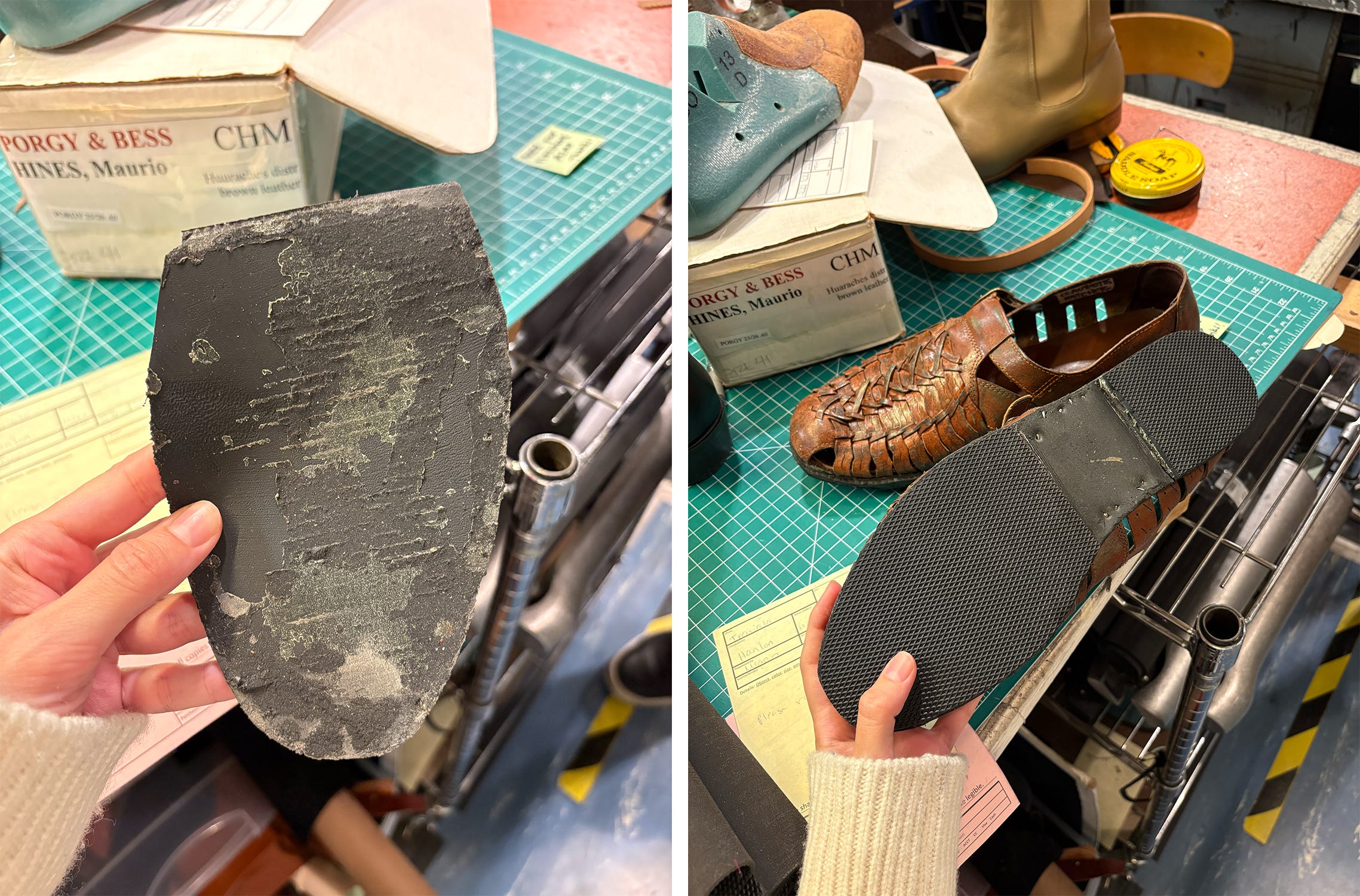
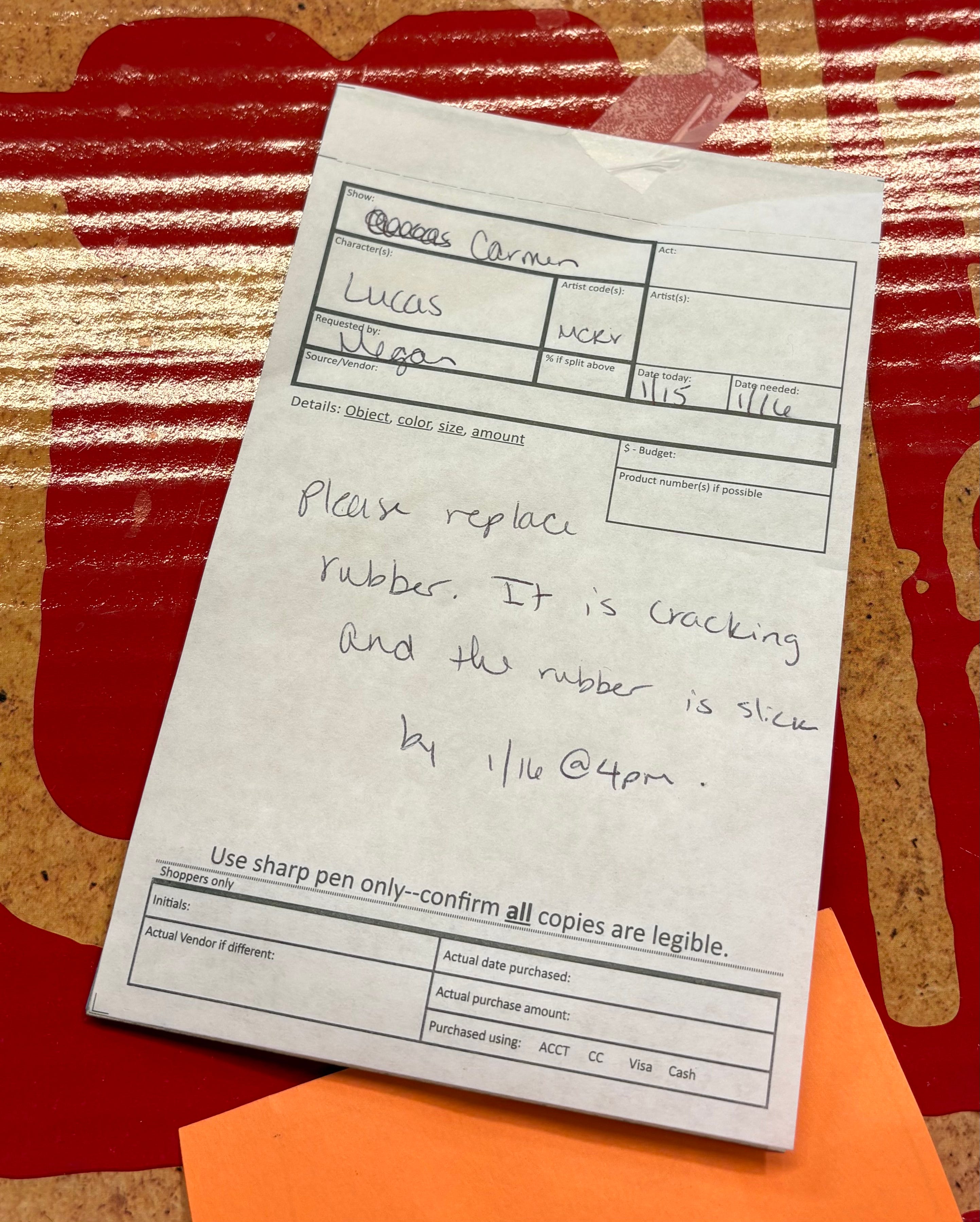
It all starts in the costume department. Typically, they’ll send him shoes designed for the sidewalk that need to be outfitted for the stage. John might replace the soles with flexible dance rubber for better grip, sand down the edges, and/or add a zipper for quick changes. Sometimes, a shoe they’ve ordered fails to materialize, and he has to produce something on the fly. He’ll also repair performers’ shoes when they inevitably wear out and make them as comfortable as possible for their achy feet.
“Last week, during The Magic Flute, one of the performer’s shoes was breaking apart, so we decided to go ahead and change the shoe and put a new elastic strap over everything,” said John. “When the performer got the new shoes, they were like, ‘Oh my God. What happened to my old shoes? Can we get them back??’ So then I had to go back to the old shoe, change up everything, and give it to him within six minutes.”
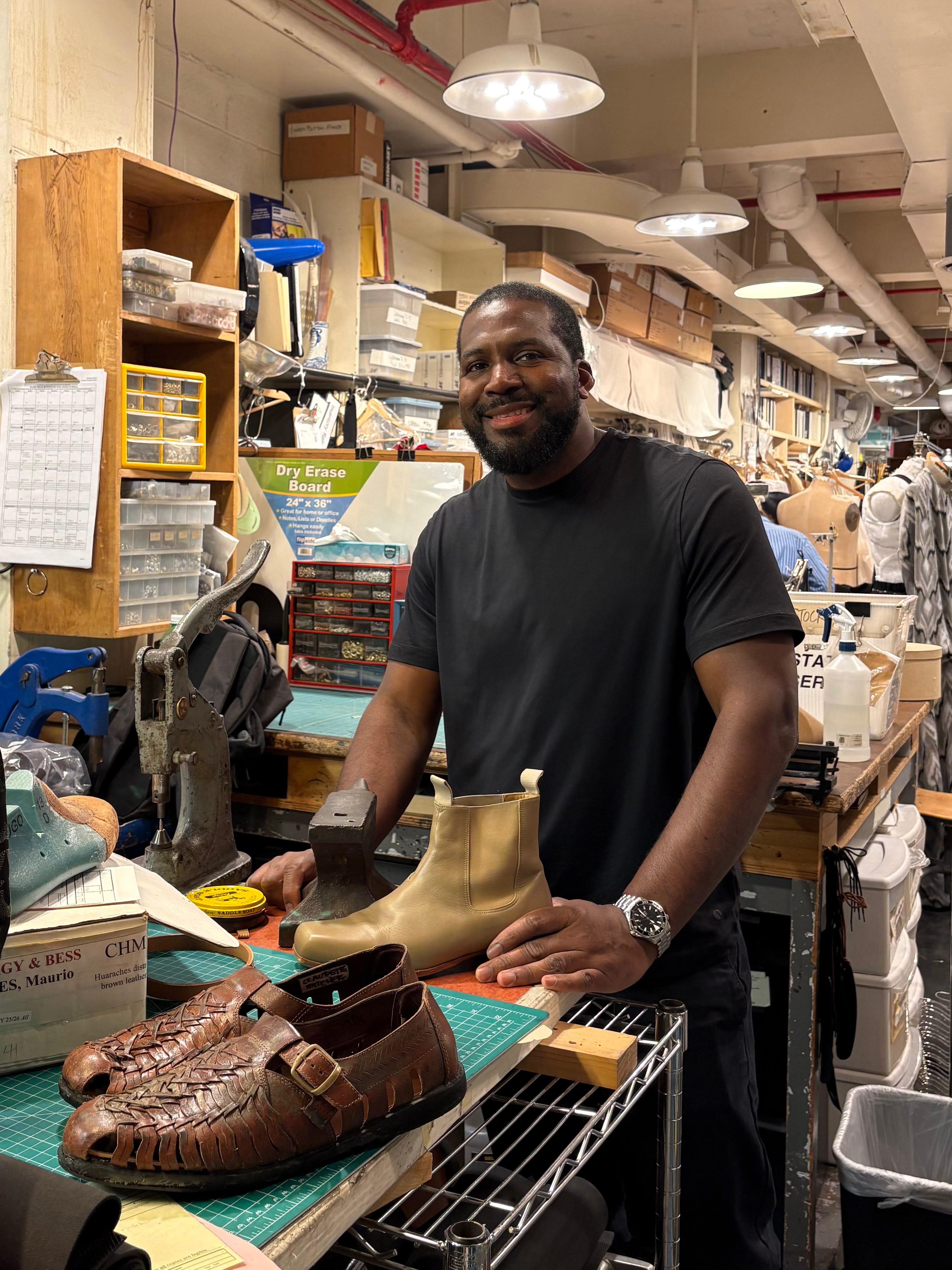
Originally from the small island of Dominica, known as the "Nature Island" of the Caribbean for its lush rainforests, large hot springs, and majestic waterfalls, John moved to New York City when he was 10. His early childhood instilled in him a resourcefulness unlike that of other city kids. “It’s a very sustainable island,” said John of Dominica. “Everyone really did everything by themselves, from building their own homes to going to the mountains, cutting down trees, carrying them down to the bay, and making different types of boats.”
He always had an affinity for craft, but he was also a talented athlete. While attending Bronx Community College, he ran track, earning All-American honors. In 2008, he was featured in an Adidas and Omega commercial with the record-breaking sprinter, Tyson Gay. He knew he was good, but he also knew “it wasn’t going to last,” he said. So he decided to pursue his creative aspirations professionally, specifically in accessories design.
“It was very hard for me because speed was my thing,” he said. “But at the same time, I wanted to slow down.”
John gave himself a challenge: if he could fill a 100-page sketchbook in a month, then at least he knew he had some ideas. “I ended up filling four,” he said. His designs, such as a colorful lace-up pump, were inspired by both sports and nature. “But then I needed to figure out how to make shoes.”
Eventually, he found his way to the Fashion Institute of Technology, where he enrolled in a two-year footwear and accessories design program, and then spent another two years earning his BFA. He finished his studies in 2020, during the pandemic, and decided to spend some time at home with his two daughters. But soon, his former professor called. The Met, which was up and running again, was looking for a cobbler. Would he be interested?
John knew he didn’t want to work at a luxury house, where he figured he’d have to churn out countless ideas, only to have many of them scrapped. “That would burn me out,” he said. “It wouldn’t sit right with me.” The Met job was perfect: he not only had the skills, but was also used to performing well within tight time constraints. He was hired on the spot.
Working in such a unique cobbling environment, John has learned a lot. “I’ve learned that a lot of people do not know how to make shoes,” he said with a laugh. “It’s like we’re Santa’s Workshop, or something; people believe that you can just snap your fingers and make everything happen. But guess what? 99.9% of the time, I do.”
He’s also learned what sustainability really means. “People think that sustainability is buying something made out of less leather, [or a leather alternative], but working here has opened up my mind a lot,” said John. If a shoe isn’t made out of a high-quality, top-grain or vegetable-tanned leather, “it will literally break into powder, or it turn into a sticky, gooey-type material after a few years.” The alternative, meanwhile, will soften and patina over time, making it easier for him to repair. “Brands sell you the idea of sustainability, but it’s not a truly sustainable item.”
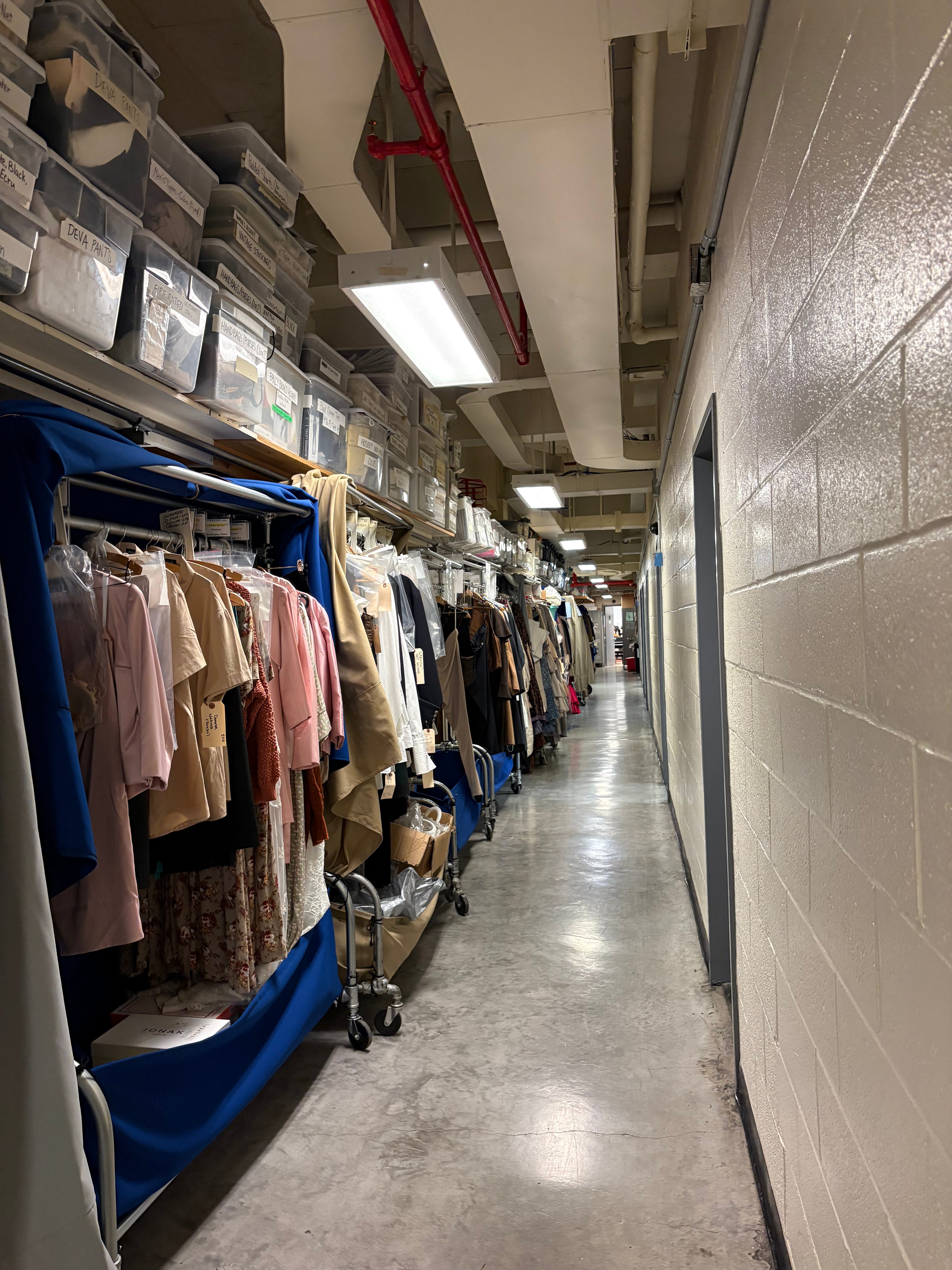
Since joining the Met’s costume team four years ago, John has seen one or two operas live. “It’s amazing,” he said. “I’ve also made friends with the singers, and they’re fabulous.” The Magic Flute, which features three children from the Met’s children’s chorus, is his favorite production for its “whimsy and fun.”
The best part of his job, he says, is helping performers feel better on their feet. “I guess I’m also the doctor,” he said. “Sometimes, they’ll come to me with an issue—they’ve tried this and that. But once I get the shoes in my hand, and I work on them, they’re like oh my god, this shoe is perfect. That feels great.”
That day, John was working on a pair of leather sandals for a performer in La Bohème. They were distressed by the costume department so that they didn’t look shiny and new. But, clearly, they’d also seen a long life on the stage. The leather was molded to the curves of the performer’s foot, and was worn smooth at the heel. “Repair is a very quiet intelligence,” said John, who spends his free time working on his own line of leather goods. “A lot of people don’t realize that. One, it saves you money in the long run. And two, it keeps your memory.”
RELATED:

LOVED. It felt like I was reading a page out of Humans of New York coffee table book. And such a good reminder of humanity and that everyone has a story. Its takes everyone to make it happen.
I loved this interview so much and hearing about John’s many talents. This edition feels so New York in my favorite way ❤️